
.png)
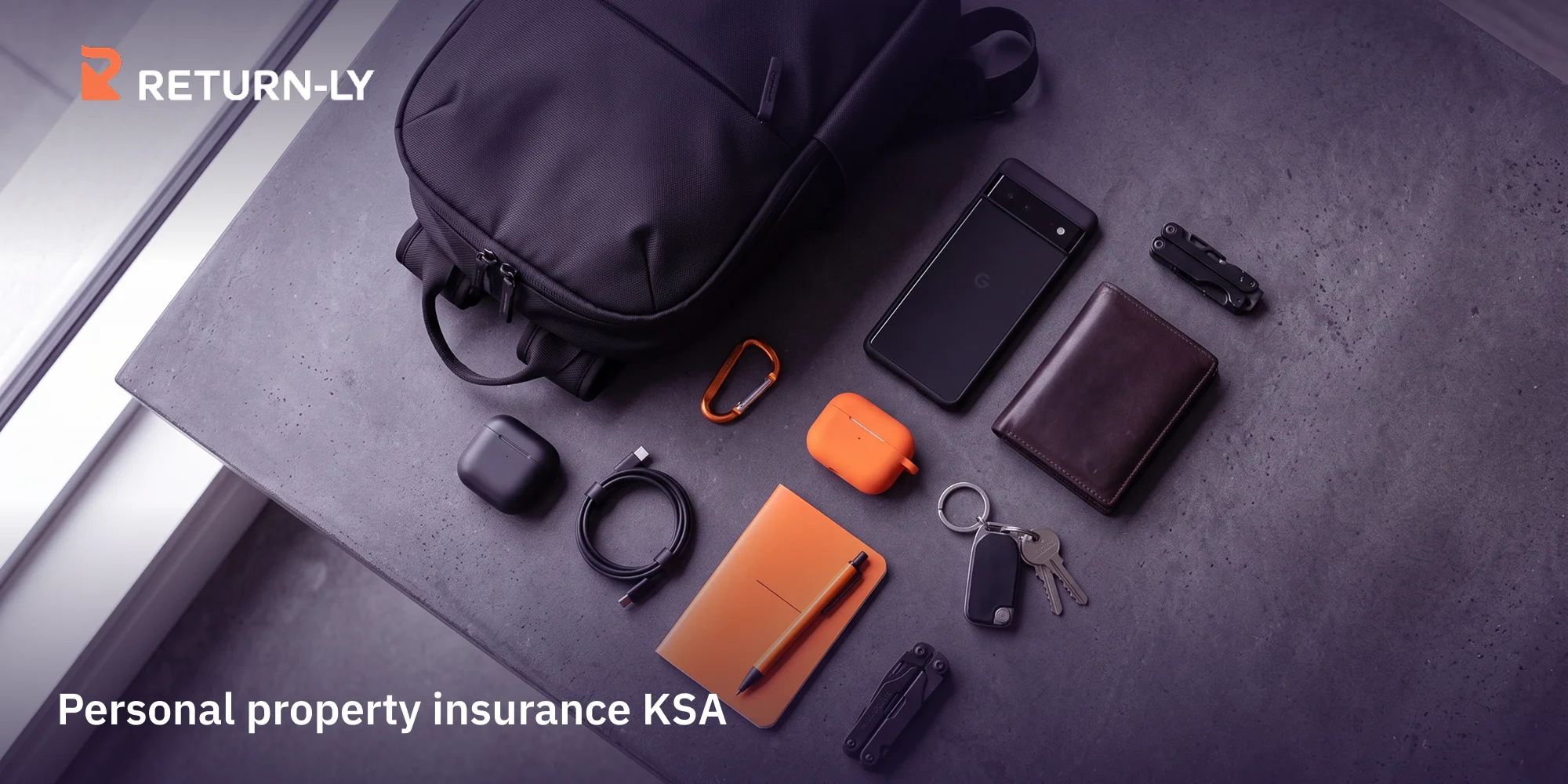
Personal property insurance KSA generally refers to insurance that protects belongings owned by an individual, including furniture, appliances, electronics, clothing and other household contents.
In Saudi Arabia, this protection is often available through home insurance or home contents cover rather than through one standard policy carrying the exact name “personal property insurance.” Some policies protect the residential building, some protect its contents, and others combine both types of cover.
The policy name alone does not determine what will be covered. The insurance schedule and contract should identify the insured property, covered risks, compensation limits, deductibles, conditions and exclusions. Saudi insurance rules require these details to be stated clearly in the policy documents.
Personal property insurance is designed to reduce the financial impact of damage to or loss of belongings when the cause is covered by the insurance contract.
The policyholder pays a premium and declares the type and value of the property requiring protection. If an insured incident occurs, the policyholder submits a claim, and the insurer assesses whether the event and affected belongings fall within the agreed coverage.
The assessment usually considers:
Insurance brokers and agents in Saudi Arabia must provide customers with key information about coverage limits, exclusions, premiums, policy dates, conditions and the company issuing the policy.
Building insurance and personal contents insurance protect different types of property.
Building cover generally relates to the physical residential structure and permanent fixtures identified in the policy. Depending on the contract, this may include walls, ceilings, doors, built-in installations and other fixed components.
Property owners may need building and contents protection. Tenants are often more concerned with cover for belongings they own because the physical structure normally belongs to the landlord.
Contents insurance focuses on movable belongings kept at the insured residence.
Depending on the selected policy, the insured contents may include:
A policy protecting the building does not automatically cover everything inside it. The customer should confirm that a separate contents value appears in the quotation and final schedule.
Saudi insurers offer home insurance products intended to protect residential property against specified accidental risks, but the scope differs between products and policy options.
To ensure your request is processed instantly, you can successfully register your report by Submit Claim via this direct link: https://claims.return-ly.com/new-claim
The insured events depend entirely on the policy wording. A home insurance plan may provide cover for several named risks, while a basic plan may protect against only a limited number of events.
A policy may cover insured furniture, appliances and other contents damaged or destroyed by a covered fire.
The insurer may request photographs, ownership evidence, a Civil Defence report or another official document confirming the cause and extent of the incident.
Theft protection may be included in the main policy or offered as an optional benefit.
The contract may require evidence of forced entry, a police report or compliance with stated security precautions. Ordinary misplacement should not automatically be treated as burglary.
Some policies may cover sudden water damage caused by an insured event, such as a burst pipe or an unexpected tank leak.
Long-term seepage, poor maintenance, gradual deterioration or an existing plumbing defect may be treated differently. The policyholder should check how the contract distinguishes sudden damage from problems developing over time.
Home insurance may include specified natural risks such as storms, floods or earthquakes. Cover should be confirmed from the listed insured events rather than assumed from a broad reference to natural disasters.
Accidental damage may cover certain unexpected physical incidents involving insured belongings, but it is not necessarily included in every standard policy.
It may be offered as an additional benefit, subject to its own limit, deductible and exclusions.
Misplacing a phone, wallet, watch or another item is not necessarily an insured event.
Insurance contracts may distinguish between:
Unless the contract clearly includes accidental loss or unexplained disappearance, the policyholder should not assume that every missing item qualifies for compensation.
The policy schedule must identify the insured property, coverage descriptions, limits, deductibles, conditions and exclusions. These terms determine whether a particular loss is eligible.
Standard home contents insurance may be limited to belongings kept at the residential address stated in the policy.
Portable items carried to work, a hotel, shopping centre or another country may require an additional extension covering property away from the insured residence.
Before purchasing personal property insurance KSA, ask whether the policy protects:
Do not assume that home contents insurance and travel insurance provide the same protection. They are separate products with different insured events, locations and claim conditions.
For example, some Saudi travel insurance products provide specific benefits for baggage loss, passport replacement or stolen cash, subject to separate limits and terms.
A general household contents limit may not provide full compensation for an expensive individual item.
The insurer may ask the policyholder to declare or schedule high-value belongings separately, including:
The contract may apply a lower sublimit to jewellery, electronics or another category even when the overall contents limit appears sufficient.
Keep invoices, certificates, photographs, serial numbers and professional valuations where relevant. Evidence prepared before an incident is usually more reliable than an estimated list created after a loss.
Three figures can significantly affect the amount paid after an approved claim.
The overall limit is the maximum amount available for all insured contents or for a particular type of loss, depending on the policy structure.
A claim exceeding that limit will not necessarily be paid in full.
A sublimit applies to a specific category within the overall cover. Jewellery, cash or portable electronics may have lower limits than ordinary household contents.
The deductible is the part of an eligible claim borne by the policyholder.
For example, when an approved loss is higher than the deductible, the insurer calculates payment according to the contract after applying the deductible and any relevant limit. The precise calculation depends on the policy terms.
Saudi insurance rules require the policy schedule to specify coverage limits and deductibles clearly.
Every policy has exclusions. They identify events, property or circumstances outside the agreed protection.
Depending on the insurer and product, exclusions may involve:
The presence of an exclusion does not mean that every policy applies it in the same way. Read the exact wording and any endorsements attached to the schedule.
Insurance intermediaries are required to explain policy limits, exclusions and conditions without inducement or deception.
Selecting an unrealistically low contents value may leave the household with insufficient protection after a major incident.
Create a room-by-room inventory and include items stored in cupboards, utility areas and storage rooms. Do not count only large furniture and visible electronics.
A useful inventory records:
Review the inventory after buying new appliances, furniture or expensive personal belongings. The insured value should continue to reflect the property actually owned.
Do not choose a policy based only on the annual premium. A cheaper option may provide lower limits, narrower protection or a higher deductible.
Begin by checking whether the quotation protects the building, personal contents or both. Then compare the exact insured events rather than relying on broad descriptions such as “comprehensive protection.”
Pay attention to:
Compare every quotation using the same declared contents value. Otherwise, a lower price may simply reflect lower protection rather than better value.
Request the full policy wording before completing the purchase. Saudi rules require the contract to state its coverage, limits, deductibles, conditions, exclusions and insured property clearly.
A clear conversation with the insurer can prevent misunderstandings at claim time.
Ask:
Request written answers or refer to the relevant policy clause. A verbal explanation should not replace the final insurance contract.
Start by protecting people and preventing further damage when it is safe to do so.
Contact the appropriate authority when the incident involves fire, burglary, theft or another event requiring an official report. Then notify the insurer through its approved claims channel within the period stated in the policy.
The insurer may request:
Keep damaged property available for inspection unless retaining it creates a health or safety risk. Do not complete major repairs or discard expensive items before checking whether the insurer needs to inspect them.
Provide accurate and consistent information. Conflicting dates, unsupported values or altered documents can delay the assessment.
An approved claim does not always result in payment of the full amount requested.
The insurer calculates the claim according to:
The contract may permit repair, replacement, cash settlement or another method, depending on its wording and the circumstances of the loss.
Ask for a written calculation when the approved amount is lower than expected. The explanation should show which limit, deductible or valuation clause affected the settlement.
Request a written rejection explaining the policy clause, exclusion or missing requirement used in the decision.
Check whether:
Submit a formal complaint to the insurer and keep the reference number.
When the insurer does not respond within five business days after receiving all required information, or the issue remains unresolved, the policyholder may escalate the complaint to the Saudi Insurance Authority through its electronic complaint service.
Insurance and lost-property recovery are separate processes.
ريتيرنلي | RETURN-LY does not have an existing relationship or integration with insurance companies. It does not sell policies, confirm whether an item is covered, assess damage, approve compensation or submit insurance claims.
At a location where RETURN-LY is activated, the platform may organise information about a missing item and an item recorded as found. After the item is identified, RETURN-LY contacts the owner and explains the available collection or shipping options.
This conditional workflow must not be presented as current coverage across every hotel, airport, mall or other location. It also does not replace an insurance claim, police report or another official procedure.
When insured property is missing or damaged, the customer should handle each route separately:
If an insured item is recovered after a claim has been submitted, notify the insurer and follow its instructions.
Several mistakes can weaken the protection provided by personal property insurance KSA:
The safest approach is to understand the policy before purchasing it, maintain evidence of ownership and follow the insurer’s claim procedure after an incident.
No. Coverage depends on the contract terms. The policy schedule, insured risks, limits, deductibles, conditions and exclusions determine which belongings and incidents qualify for compensation.