
.png)
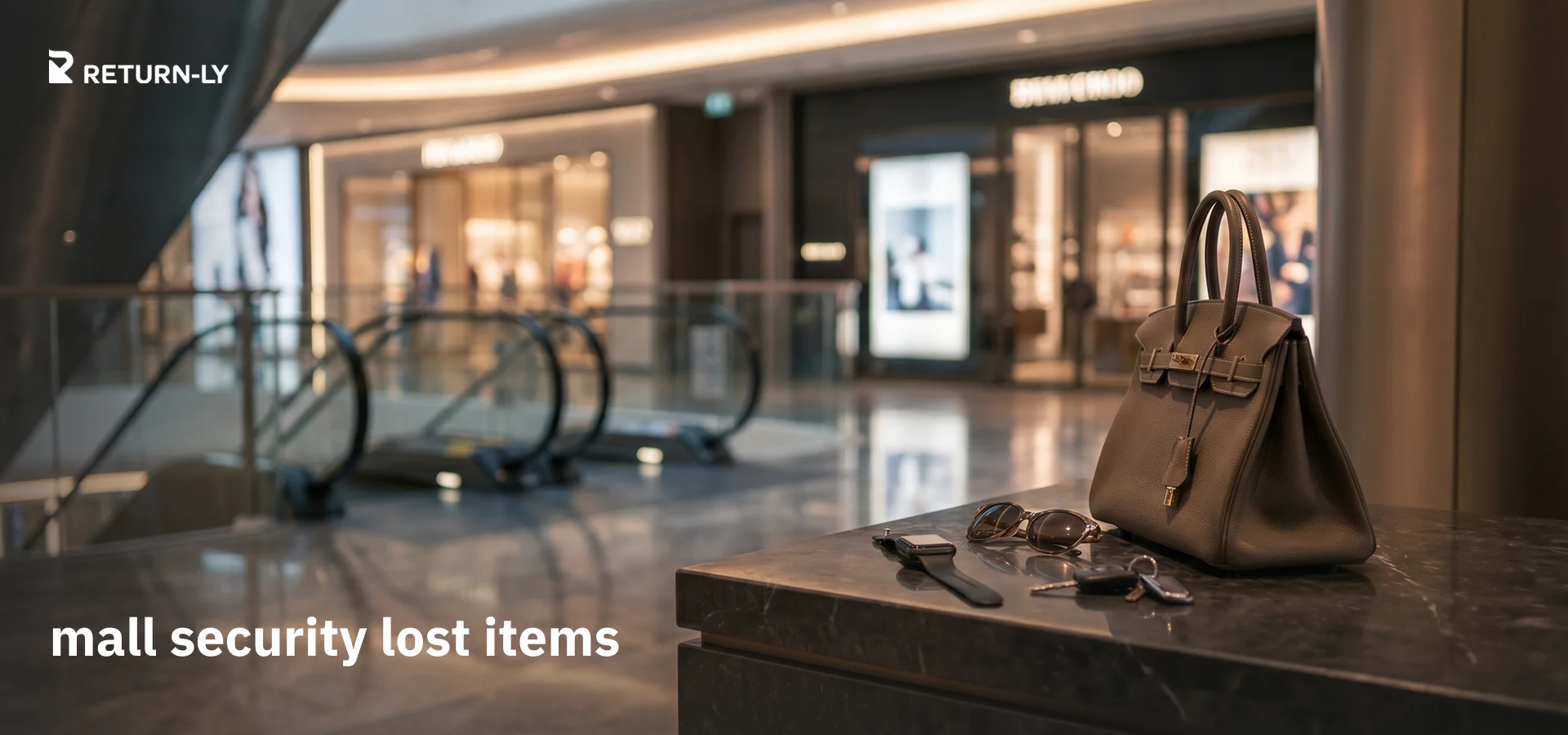
Mall security lost items management is a critical responsibility that ensures visitors’ belongings are handled quickly, safely, and efficiently within shopping malls. As visitor traffic continues to grow, security teams face increasing pressure to respond to lost item reports while maintaining overall safety and order. Inefficient handling can lead to delays and customer dissatisfaction.
In this guide by ريتيرنلي | RETURN-LY we explore how mall security teams manage lost items effectively and how modern systems are transforming this essential operational process.
Mall security teams are responsible for handling lost items because they play a central role in maintaining safety, order, and operational control within the mall environment. Since they are constantly present across all areas, security staff are often the first point of contact when visitors report missing belongings.
Managing mall security lost items also helps security teams maintain structured oversight of found objects, reduce confusion, and ensure proper documentation. This responsibility supports smoother coordination between different departments such as customer service and operations, while also improving response time and enhancing the overall visitor experience inside the mall.
Mall security teams deal with a wide range of lost items every day, especially in high-traffic shopping environments. Understanding the most common categories helps improve organization, response time, and recovery efficiency.
These items represent the majority of cases handled under mall security lost items operations and require quick documentation and proper storage to ensure easy retrieval and high customer satisfaction.
Mall security teams follow a structured workflow to ensure that lost items are properly managed, documented, and returned to their rightful owners. This process helps maintain accuracy, transparency, and efficiency within mall operations.
This structured workflow ensures efficient handling of mall security lost items while improving accuracy, speed, and customer satisfaction.
Mall security teams face several operational challenges when dealing with lost items, especially in large and crowded shopping environments. These challenges can affect efficiency, response time, and overall customer satisfaction.
To ensure your request is processed instantly, you can successfully register your report by Submit Claim via this direct link: https://claims.return-ly.com/new-claim
Technology has significantly transformed how mall security lost items are managed by introducing speed, accuracy, and automation into daily operations. Instead of relying on manual logs and fragmented communication, modern systems provide a centralized and efficient workflow for handling lost belongings.
By integrating technology into mall security lost items handling, malls achieve higher efficiency, better accuracy, and significantly improved customer satisfaction.
Efficient handling of lost items by mall security requires clear procedures, consistency, and the use of structured systems. Applying best practices ensures faster response times, fewer errors, and improved customer satisfaction.
Implementing these best practices significantly enhances mall security lost items management by improving efficiency, accuracy, and overall service quality.
Modernizing mall security lost items management with RETURN-LY improves speed, accuracy, and customer satisfaction by turning manual processes into efficient digital workflows that reduce workload and errors.
Upgrade your operations today with RETURN-LY and experience smarter, faster lost item handling with advanced solutions.
If you lose your phone in a mall, immediately report it to the mall security or customer service desk. Provide a clear description of the phone, last known location, and time of loss. Security teams will check found items and CCTV records, and register your case to help locate and return the device as quickly as possible.
Mall security collects lost items, records detailed information such as description and location, assigns a tracking ID, and stores the item securely. When someone claims the item, identity verification is performed before returning it, ensuring safe and accurate handling.