
.png)
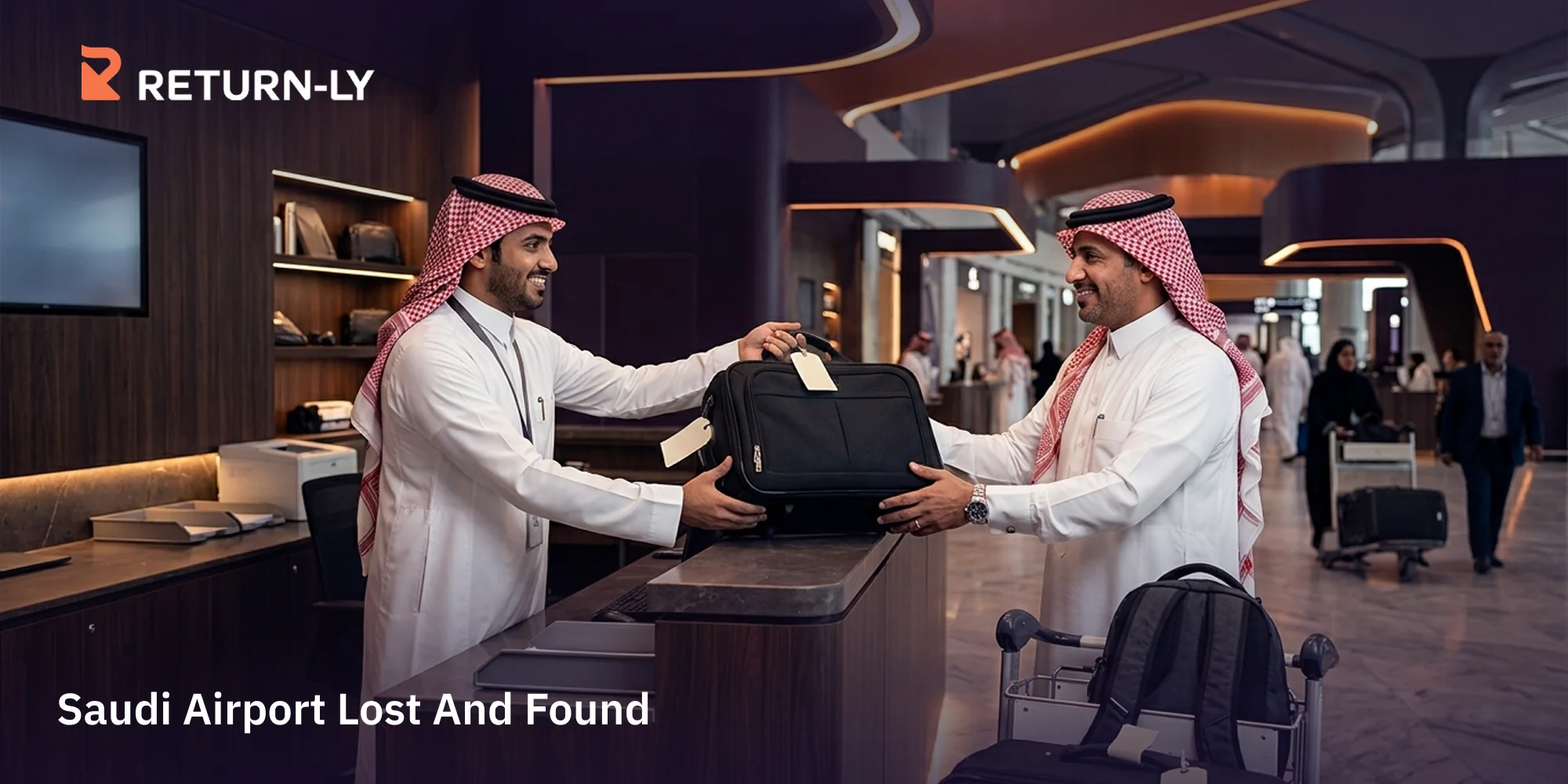
Discovering that your suitcase did not arrive, your phone is missing after security, or a personal item was left on the aircraft can create immediate confusion. The first question is usually the same: who is responsible for helping you?
A Saudi airport lost and found process depends largely on where and how the item was lost. Checked baggage is generally handled through the airline and baggage services, belongings lost inside an airport terminal may fall under the airport's lost-and-found process, while items forgotten onboard an aircraft are normally handled by the airline. Understanding that distinction can save travelers from contacting several departments about the same problem.
“Lost at the airport” can describe several very different situations.
A suitcase that was checked in but did not appear on the baggage belt is not handled in the same way as a wallet left at a café inside the terminal.
Before reporting the loss, determine which category best describes the situation:
This first distinction determines which organization is most likely to manage the case.
When checked luggage fails to arrive at the final destination, the airline that accepted the baggage is responsible for handling the baggage case under the applicable passenger-rights framework.
Saudi Arabia's General Authority of Civil Aviation regulations address delayed, damaged, and lost checked baggage. Under the current regulations, if checked baggage has not arrived within 21 days of the date it was scheduled to arrive, the passenger has the right to request that the air carrier treat the baggage as lost.
This is why passengers should not simply leave the airport and wait to see whether the suitcase appears later.
A report should be created as early as possible through the airline's baggage-service channel.
If your checked suitcase is missing from the baggage carousel, the most useful first step is usually to visit the relevant Baggage Service Desk in the arrivals area.
King Abdulaziz International Airport, for example, instructs passengers with lost, damaged, or delayed baggage to file a report at the Baggage Service Desk and contact their airline directly.
The airline may ask for information such as:
Keep any report or claim reference you receive. It can be important for later communication with the airline.
The small baggage receipt issued during check-in can become one of the most useful pieces of information when luggage does not arrive.
It connects the suitcase with the checked-baggage record associated with the passenger's journey.
For that reason, travelers should avoid discarding baggage receipts until all checked bags have been collected successfully.
If the receipt is available when making a report, provide its details along with the booking and flight information requested by the airline.
To ensure your request is processed instantly, you can successfully register your report by Submit Claim via this direct link: https://claims.return-ly.com/new-claim
Leaving the terminal does not necessarily mean you can no longer report delayed baggage, but the next steps depend on the airline.
For example, Saudia currently advises passengers to report delayed checked baggage at the Baggage Services Office before leaving the arrivals area. If they have already left, Saudia provides an online process for creating a delayed-baggage claim within 48 hours of flight arrival.
That 48-hour process is Saudia-specific and should not be assumed to apply to every carrier.
If you have left the airport, check the official baggage procedure of the airline that carried your luggage and act promptly.
A different process applies when the missing item was never checked as baggage.
You might leave:
These are terminal lost-property cases rather than delayed checked baggage.
At King Abdulaziz International Airport, for example, the official lost-and-found guidance distinguishes between items with baggage tags and items without baggage tags. Depending on the terminal, untagged items may be handled through customer service or the terminal duty manager, while tagged baggage is directed to baggage services.
Other Saudi airports may use different desks or procedures, so travelers should check the official channel for the airport where the loss occurred.
If you know the item was left in a seat pocket, overhead compartment, or elsewhere onboard the aircraft, contact the airline rather than assuming the airport lost-and-found office manages it.
King Abdulaziz International Airport's official guidance specifically directs passengers who lose something onboard an aircraft to contact their airline.
Airlines may have their own procedures for collecting and storing items found after passengers disembark.
This is one of the most important distinctions in any Saudi airport lost and found search:
Checked baggage → airline/baggage services.
Item left onboard → airline.
Item lost inside the terminal → airport lost-and-found channel.
“Black suitcase” or “white phone” may not be enough.
Airports and airlines may handle many similar belongings every day, so the description should help distinguish your property without requiring you to disclose unnecessary sensitive information.
For luggage, useful details may include:
Brand: Samsonite, Delsey, American Tourister, or another manufacturer.
Type: Hard-shell suitcase, soft-sided bag, backpack, cabin case, or duffel.
Color: Be as specific as reasonably possible.
Distinguishing marks: Straps, stickers, scratches, ribbons, or luggage covers.
For personal items, describe the external characteristics first rather than providing passwords, PINs, banking details, or other sensitive information.
Travelers sometimes post complete descriptions of valuable belongings on public social media channels hoping someone will recognize them.
That can make ownership verification harder.
If every unique characteristic of a wallet, laptop, watch, or piece of luggage is publicly disclosed, another person may be able to repeat those details when claiming the item.
A better approach is to provide the necessary information through the official reporting channel while keeping some distinctive details available for later verification.
Airports involve several organizations operating in the same physical environment.
Passengers may interact with:
From the passenger's perspective, all of these activities happened “at the airport.”
Operationally, however, each organization may be responsible for a different part of the journey.
That is why identifying where the item was last seen is often more useful than simply saying it was lost at the airport.
Imagine three passengers arrive in Jeddah.
The first passenger's checked suitcase never appears on the carousel. That person should begin with baggage services and the airline.
The second leaves a phone inside the aircraft seat pocket. The airline is the relevant contact.
The third places a wallet on a terminal seat after collecting baggage and walks away. That is more likely to follow the airport's terminal lost-and-found procedure.
All three people may search for Saudi airport lost and found, but they do not necessarily need the same department.
Even when the lost item is not a checked suitcase, travel details can help narrow down where it may have been found.
Useful information can include:
The more accurately you can establish the location and timeframe, the easier it becomes for the responsible team to understand where the item may have entered the lost-property process.
A delayed suitcase and a legally treated lost suitcase are not necessarily the same thing from the first day.
GACA's current Passenger Rights Protection Regulations state that checked baggage that has not arrived within 21 days of its scheduled arrival can, at the passenger's request, be treated as lost by the air carrier. The regulations also contain compensation provisions for delayed and lost checked baggage.
Because these are airline passenger-rights matters, compensation or claims should be pursued through the responsible carrier and the applicable official process—not through a general airport lost-property service.
Passports, wallets, laptops, jewelry, phones, and official documents create additional privacy and ownership concerns.
Finding a possible match should not automatically mean releasing the item.
The claimant may need to provide information that helps demonstrate ownership without exposing unrelated personal details.
Similarly, employees handling found electronics should avoid unnecessary attempts to access device contents simply to identify the owner.
Secure return is more important than fast return.
The traditional lost-property experience often forces travelers to repeat the same description several times.
They call one number, are transferred to another department, email another team, and eventually repeat the story to someone else.
A structured digital process can help keep the report information in one place and make it easier for authorized teams to work with consistent details.
For airports and airlines, the benefit is operational organization.
For travelers, it means a clearer starting point and less dependence on finding the correct individual employee.
RETURN-LY should not be presented as a replacement for an airline's checked-baggage process or an airport authority's official lost-and-found responsibilities.
In the general ريتيرنلي | RETURN-LY workflow, when the service is activated at a partner location, the owner can submit a report containing contact information, item description, color, date of loss, category, and an optional image.
If an employee at that activated partner location finds an item, the employee records it. After the item is identified, RETURN-LY contacts the owner with the location and available collection or shipping options.
There is no direct communication between the owner and the employee who recorded the item.
In an airport context, this workflow would apply only where the service has actually been activated at the relevant partner location. It should not be interpreted as meaning that RETURN-LY currently operates across Saudi airports, handles airline baggage claims, or has a partnership with a particular airport or carrier.
One mistake creates more confusion than almost any other: reporting the loss to the wrong organization and waiting for a response.
Passengers should also avoid:
A few minutes spent identifying the correct channel can prevent hours of unnecessary follow-up.
An effective Saudi airport lost and found experience starts by separating three different problems: delayed or missing checked baggage, belongings lost inside the terminal, and property forgotten onboard an aircraft.
Once the correct category is identified, the traveler can contact the organization responsible for that part of the journey, provide accurate details, retain the relevant reference information, and follow the approved recovery procedure.
The system cannot guarantee that every missing suitcase, phone, wallet, or personal belonging will be found. But knowing where to report it—and doing so quickly—creates a far more organized path toward recovery.
If checked luggage does not arrive, go to the airline or Baggage Service Desk in the arrivals area before leaving the airport, provide your flight and baggage-tag details, describe the missing bag, give your contact information, and keep the report reference. If you have already left the airport, use the official delayed-baggage process provided by your airline.
Use the official lost-and-found or customer-service channel provided by the airport where the item was lost. The exact office can vary by airport and terminal.
Contact the airline that operated the flight. Items left onboard are generally handled through the airline's own lost-property or baggage-service process.