
.png)
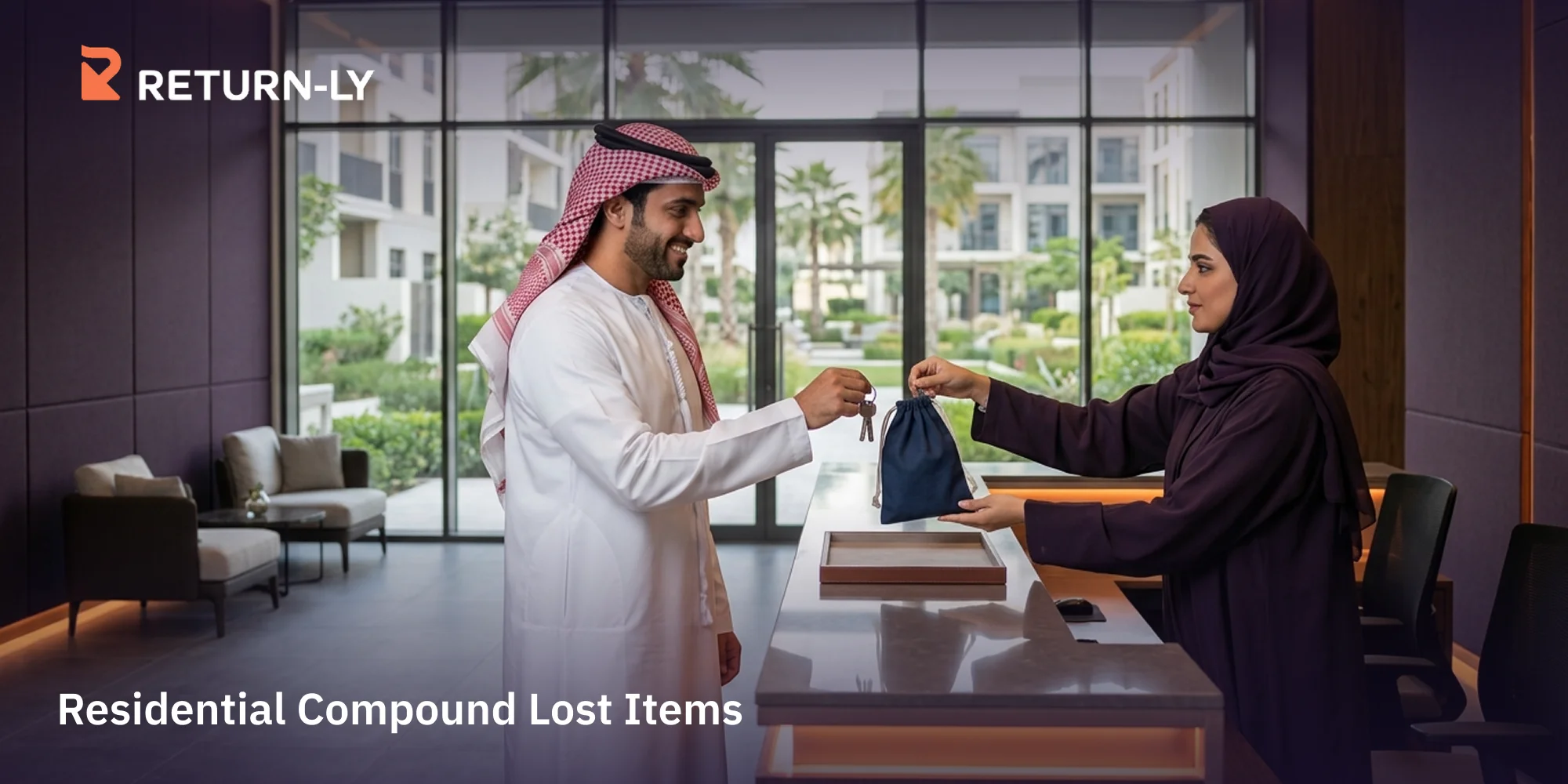
Large residential compounds create a unique challenge when it comes to managing lost belongings. Unlike small residential buildings, compounds may include hundreds or thousands of residents, multiple buildings, shared facilities, security points, recreational areas, and service teams.
A resident may lose a phone near a gym, leave keys in a common area, forget a wallet at a community facility, or misplace personal belongings while moving between different locations inside the compound.
The challenge is not only finding the lost item. The real difficulty is creating a clear process that answers important questions:
This is where residential compound lost items management becomes essential. A structured approach helps residential communities reduce confusion, improve resident experience, and manage lost belongings through a centralized process instead of relying on individual employees or scattered communication.
Residential compounds often operate like small communities rather than single buildings.
They may include:
Because residents and employees move through many locations daily, lost items can be discovered by different people at different times.
For example:
A cleaner finds a wallet near a shared facility.
A security officer receives a set of keys at another location.
A resident contacts the administration office asking about a missing phone.
Without a unified process, each situation may become a separate search effort.
The problem is not always that the item was not found. The problem is that information about the item is not organized.
Residential compound lost items management refers to the process of recording, securing, tracking, and returning belongings that residents lose within a residential community.
A structured lost-property process helps compounds manage:
The purpose is to create a clear journey for every item from the moment it is found until it reaches its owner or the case is closed.
Many residential communities still rely on informal methods:
These methods may work when the number of residents is small, but they become difficult as communities grow.
Common challenges include:
A resident should not have to contact multiple people to discover whether a lost item was already found.
A common mistake is starting the process only after a resident reports a missing item.
In many cases, the item may already be with the compound team.
For example:
A resident leaves a phone near the swimming pool.
A staff member finds it during cleaning.
If the item is recorded immediately, the administration already has useful information before receiving any inquiry.
A basic record may include:
This reduces dependence on remembering who handled the item first.
In a large residential compound, different teams may interact with lost belongings:
If each department keeps separate information, finding the item may become harder than the original loss.
A centralized record helps authorized employees access the information needed for their role.
Instead of asking:
“Did security receive this?”
“Was something found near building five?”
“Who has the keys?”
The team can review the recorded status of the case.
This creates a more reliable process for both residents and management.
Losing a personal belonging creates uncertainty.
Residents usually want simple answers:
A digital lost-property process gives residents a clearer reporting channel and helps management organize responses.
Instead of depending on personal communication with individual employees, the case follows a defined workflow.
This does not guarantee that every missing item will be recovered, but it improves the process when belongings are located.
Not all lost items should be handled in the same way.
Some belongings require more careful management, including:
These items may contain personal information or provide access to private spaces.
Residential compounds should avoid unnecessary access to personal information stored on devices or documents.
For example, employees should not attempt to unlock a phone or review private files simply to identify the owner.
Ownership should be verified using appropriate information before returning valuable belongings.
Large compounds may contain many similar items.
Several residents may own:
Returning an item based only on a general description can create mistakes.
A better process keeps some identifying details private and asks the claimant to provide information that confirms ownership.
Examples include:
The goal is to make the return process efficient without compromising accuracy.
Lost items can create unnecessary workload for administration and security teams.
Employees may spend significant time answering repeated questions:
A structured system reduces this pressure by organizing:
This allows staff to focus on situations requiring direct attention instead of repeatedly searching through messages or asking different departments.
One of the biggest challenges in compounds is the number of possible locations where items can be lost.
A resident may lose belongings at:
Without location records, all areas become part of one large search.
Recording where an item was found helps narrow the process and improves the ability to connect residents with their belongings.
A lost item process should not end after the first attempt to contact the owner.
Large communities need a clear approach for handling items that remain unclaimed.
This may include:
The important point is avoiding a situation where storage areas become filled with items that no one can properly track.
In the general ريتيرنلي | RETURN-LY، workflow, when the service is activated at a partner location, the owner can submit a lost-item report containing contact information, item description, color, date of loss, category, and an optional image.
When an employee at the activated partner location finds an item, the employee records it separately. After the item is identified, RETURN-LY contacts the owner with information about its location and available collection or shipping options.
There is no direct communication between the owner and the employee who recorded the found item.
For residential compounds, this type of workflow can provide a more organized communication path when the service is activated within the community.
It should not be interpreted as meaning that RETURN-LY operates in all residential compounds, replaces security procedures, or has partnerships with specific communities unless officially confirmed.
Some practices increase confusion even when teams are trying to help residents.
Common mistakes include:
A successful process depends on consistency and clear responsibilities.
Technology does not replace security teams or community management staff.
Instead, it helps them organize information and reduce repetitive work.
A digital lost-property workflow can help compounds:
The value comes from making information easier to manage, not simply storing more data.
Managing lost belongings in residential compounds is not only about storing items until someone asks about them.
It is about creating a reliable process that connects residents, employees, and management teams through clear information.
Effective residential compound lost items management helps communities reduce confusion by documenting found items, improving communication, protecting resident privacy, and creating a structured path for recovery.
For residents, this means a clearer way to report and recover belongings.
For management teams, it means less dependence on manual searches and individual employee knowledge.
A well-organized lost-property process turns an everyday inconvenience into a manageable operational workflow.
Lost property in residential compounds is managed by recording found items, securing them, verifying ownership, and arranging return through the approved community process. A centralized digital system can help organize reports, track item status, and improve communication between residents and management teams.
Residents should report the item through the designated lost-property channel and provide useful details such as item description, location where it was last seen, approximate time, and contact information.
Compounds can reduce repeated inquiries by creating a centralized reporting process, maintaining updated item records, and providing residents with a clear communication channel for following up on their cases.