
.png)
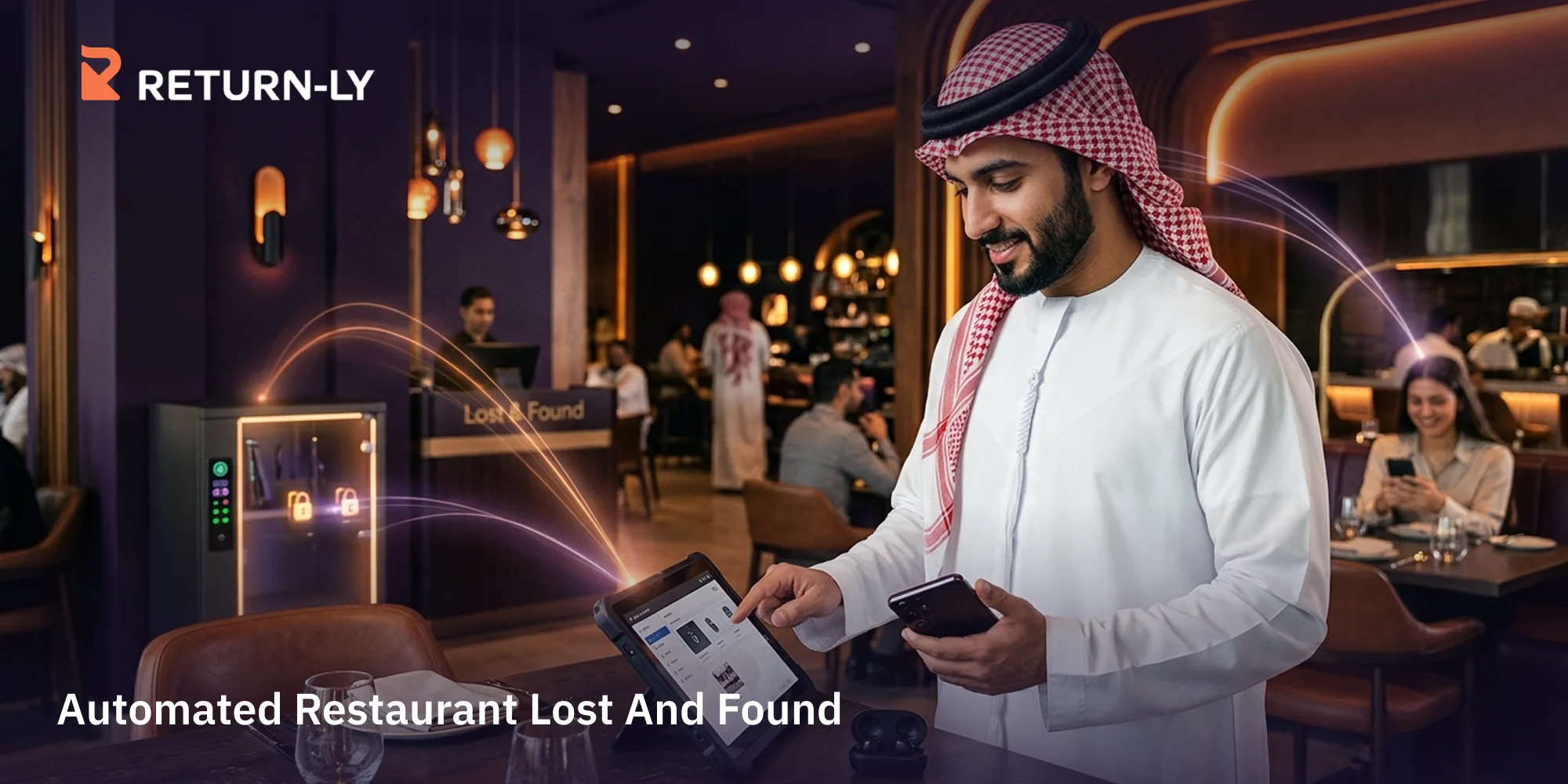
A guest forgetting a wallet, phone, or personal belonging in a restaurant is a common situation, but managing these cases efficiently can become a serious operational challenge.
For restaurants, the problem is not only storing forgotten items. The real challenge is creating a reliable process that helps employees record found belongings, respond to guest inquiries, verify ownership, and complete returns without disrupting daily operations.
When lost and found management depends on phone calls, handwritten notes, or employee memory, valuable time is spent searching for information instead of serving guests.
An automated restaurant lost and found system helps restaurants organize this process digitally by creating structured records, improving communication, and reducing the repetitive work associated with managing forgotten items.
Restaurants handle hundreds of guest interactions every day. During busy periods, forgotten belongings can easily become difficult to track.
A guest may leave:
The item may be found by one employee, stored by another, and requested later by a guest who contacts a different team member.
Without a clear process, restaurants may face challenges such as:
The issue is often not the absence of the item, but the absence of organized information.
An automated restaurant lost and found system is a digital workflow designed to organize how restaurants manage forgotten and recovered belongings.
Instead of relying on separate messages, calls, or paper records, the restaurant can create a structured process for:
The purpose of automation is not to remove employees from the process. It is to give teams better visibility and reduce repetitive administrative work.
Traditional lost and found processes often depend on individual employees remembering details.
For example:
A waiter finds a wallet after a guest leaves.
The wallet is given to a supervisor.
The guest calls later and speaks with another employee.
The employee now needs to ask:
This creates unnecessary delays and increases pressure on restaurant teams.
A digital process reduces this dependency by keeping important information connected to the case.
A structured digital workflow allows restaurants to maintain clearer records for each item.
Information may include:
This helps employees understand the history of the item without relying on previous conversations or personal memory.
The result is a more consistent process between different shifts and teams.
Many lost and found inquiries are not new cases; they are customers asking for updates.
Guests often want to know:
When restaurants manage these questions manually, employees spend time repeating the same steps.
An automated reporting process helps organize information from the beginning, making it easier for teams to respond with accurate updates.
This reduces unnecessary communication while creating a clearer experience for guests.
Automation can organize information, but it should not replace verification.
Restaurants may have multiple similar items, such as:
Returning an item based only on a general description can create mistakes.
A proper process may require the guest to provide identifying details that confirm ownership, such as:
This protects both the guest and the restaurant.
Restaurant groups with multiple locations face additional challenges.
A guest may forget an item in one branch while contacting a central customer service team.
Without a unified process, information can become separated between locations.
A digital lost and found workflow helps authorized teams understand:
This creates a more consistent experience across different restaurant locations.
The handling of forgotten items depends on local regulations, restaurant policies, and the type of item involved.
Restaurants should follow the applicable requirements in their location regarding storing, handling, and returning guest belongings.
An organized lost and found process helps restaurants manage these responsibilities more effectively by maintaining clear records of found items and documenting actions taken.
The goal is not only keeping items temporarily, but ensuring they are handled through a clear and responsible process.
Not all forgotten items require the same level of attention.
Items such as:
may contain sensitive information or have significant value.
Restaurants should consider:
Employees should avoid unnecessary access to personal information, such as attempting to unlock devices or reviewing private content.
A guest who loses an item is already dealing with frustration.
The restaurant’s response can influence how the guest remembers the overall experience.
A structured process helps create:
The goal is not promising that every lost item will be recovered, but ensuring that every case is handled professionally.
Restaurant employees already manage many responsibilities:
Lost item inquiries add another layer of work, especially when information must be searched manually.
Automation can reduce time spent on:
This allows teams to focus on hospitality while maintaining better control over lost property.
Lost item reports may include personal information such as:
A responsible digital process should focus on:
A better process should improve efficiency while respecting guest privacy.
In the general ريتيرنلي | RETURN-LY، workflow, when the service is activated at a partner location, the owner can submit a lost-item report containing contact information, item description, color, date of loss, category, and an optional image.
When an employee at the activated partner location finds an item, the employee records it separately. After the item is identified, RETURN-LY contacts the owner with information about its location and available collection or shipping options.
There is no direct communication between the owner and the employee who recorded the found item.
For restaurants, this type of workflow can provide a more organized communication path when the service is activated at the restaurant location.
It should not be interpreted as meaning that RETURN-LY operates with all restaurants, replaces restaurant procedures, or has partnerships with specific brands unless officially confirmed.
Even restaurants with strong service standards can face problems when lost property processes are unclear.
Common mistakes include:
A consistent process reduces confusion and protects both guests and restaurant teams.
As restaurants focus more on guest experience, every interaction matters, including situations that happen after the guest leaves.
An automated restaurant lost and found system helps restaurants move from reactive handling to organized management.
By improving reporting, tracking, communication, and verification, digital workflows make forgotten items easier to manage without adding unnecessary pressure to employees.
Automation does not replace hospitality. It supports it by helping restaurant teams provide a more reliable experience when unexpected situations occur.
The requirements for keeping forgotten items depend on local regulations, restaurant policies, and the type of item involved. Restaurants should follow applicable procedures for handling, storing, and returning guest belongings while maintaining clear records of found items.
Guests should contact the restaurant through its available lost and found channel and provide details such as the visit time, location, and item description. The restaurant can then verify ownership and arrange return according to its procedures.
Yes. An automated system can help restaurants organize reports, track item status, reduce repeated inquiries, and improve coordination between employees handling lost belongings.